

Space tends to get tighter gradually. A few extra pallets arrive, a new line gets added, desks are moved to make room for something else, and before long the building doesn’t feel as workable as it once did.
We see that with businesses across Lancashire.
At Millennium Storage & Interiors, mezzanine floors are often discussed when ground-floor space starts feeling stretched. Not because the building is too small, but because the way it’s being used has changed over time.
Adding a mezzanine floor is usually about making better use of the space that’s already there, rather than expanding for the sake of it.
Making Use of Height That’s Already There
Many industrial and commercial buildings across Lancashire were built with generous ceiling height. That space above head level often stays untouched while activity below becomes harder to manage.
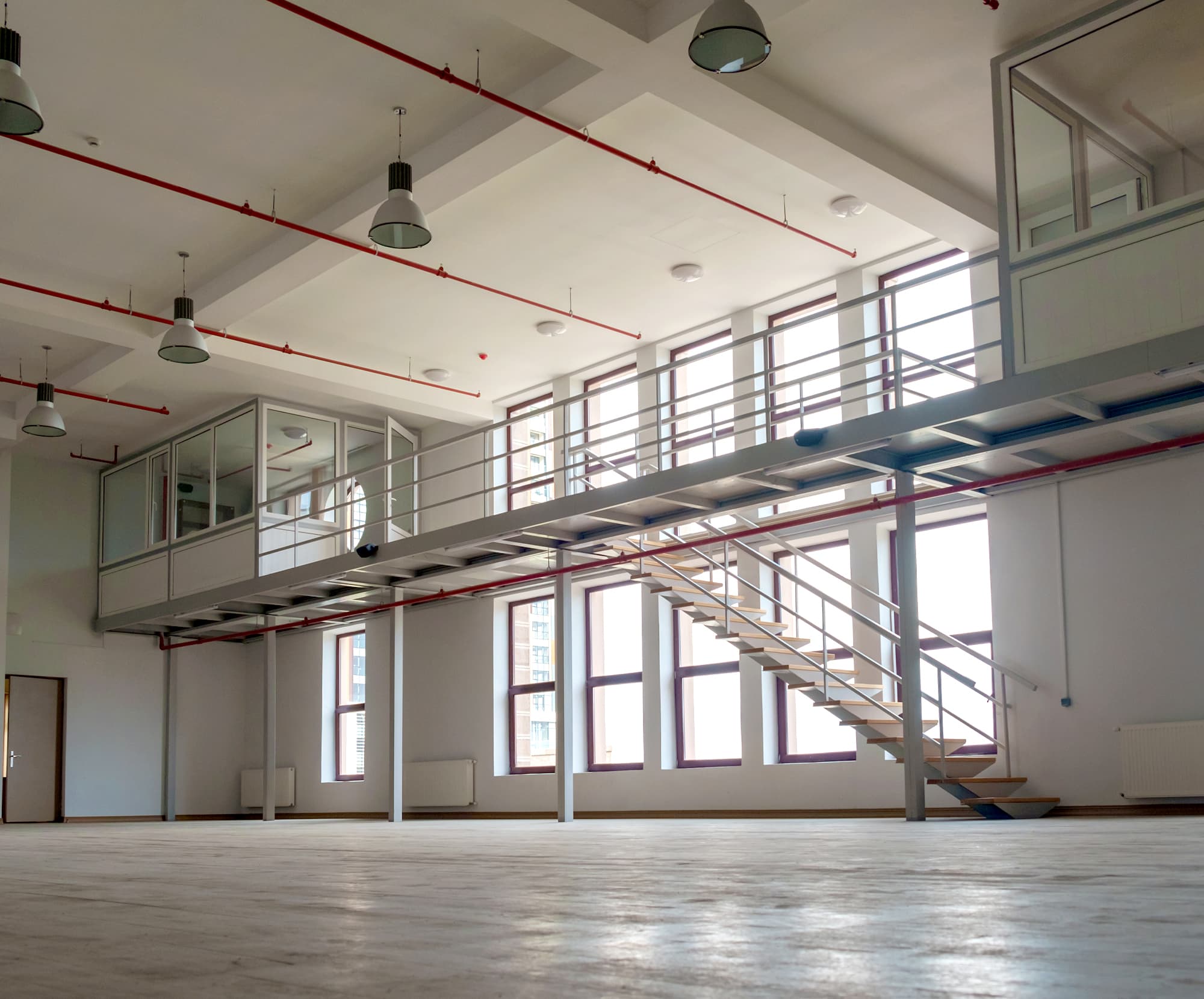
A mezzanine floor makes that unused height part of the working space. In some buildings it becomes additional storage. In others, it’s office space within a warehouse, a packing area, or somewhere that separates different parts of the operation.
For a lot of Lancashire businesses, that extra level is enough to take pressure off without needing to relocate.
How We Approach Mezzanine Floors in Lancashire
Every building behaves differently once people and stock are moving through it. Drawings are helpful, but they never show where things naturally bottleneck or where access becomes awkward.
That’s why we start by walking the space properly. We look at how it’s used day to day, where materials build up, and where headroom genuinely matters. Once you’re on site, the practical challenges tend to stand out quickly.
From there, the mezzanine design takes shape around the building. Column positions, access routes and load requirements all influence how it’s laid out. The aim is always the same — add space without creating new complications elsewhere.
Where Mezzanine Floors Tend to Work Well
Across Lancashire, mezzanine floors are used in a range of environments. Some are straightforward storage platforms. Others combine storage with office or light production areas.
We regularly install mezzanine floors in:
- Warehouses and distribution units
- Manufacturing and assembly spaces
- Trade and wholesale premises
- Mixed-use commercial buildings
Often it isn’t about one specific use, but about keeping the space flexible so it can adapt as the business changes.
Built to Cope With Everyday Use
A mezzanine floor needs to hold up under daily activity. Stored goods, foot traffic and equipment all put pressure on the structure over time.
Practical details like stair placement, handrails and floor finishes are considered as part of the overall layout. The finished level should feel like it belongs in the building, not like it’s been added as an afterthought.
Working Within Live Buildings
Most businesses can’t afford to stop operating while improvements are made. We’re used to installing mezzanine floors in live environments and planning the work so disruption is kept manageable.
That usually means thinking through access and staging the work sensibly so the rest of the building can continue functioning as it needs to.
A Practical Approach Across Lancashire
We’ve been installing mezzanine floors across Lancashire for many years, working with businesses of different sizes and across different sectors. A good portion of our work comes through recommendation or repeat projects, which tends to follow when something has been done properly and continues to work over time.
If your building has unused height and floor space is starting to feel limited, a mezzanine floor could be worth considering.
Thinking About Mezzanine Floors in Lancashire?
If you’re considering mezzanine floors in Lancashire, we’re happy to visit your site, walk the space and talk through what’s realistically possible. No pressure — just a straightforward look at whether an additional level would help.
For many Lancashire businesses, mezzanine floors have provided a practical way to create room without changing premises.